
Losing weight with GLP-1 medicines: benefits, limitations and strategies for everyday life
What to expect from semaglutide or tirzepatide and how to eat well and maintain strength as your appetite changes.
When treatment changes your appetite, new questions come up. Am I eating enough? How can I stay strong? What happens if I stop taking the medicine? In my practice and on wellness retreats, I start by asking what losing weight means to each person. For some, it means moving more easily. For others, it means improving their metabolic health or finding a way forward after years of trying.
These medicines act on signals from GLP-1 (glucagon-like peptide-1), a gut hormone involved in appetite and blood sugar regulation. Here is what we know about their benefits and the care people may need along the way.
Who are these medicines for?
For adults, a doctor may consider semaglutide or tirzepatide for weight management in two situations, based on body mass index (BMI):
- Obesity: a BMI of 30 or above.
- Overweight: a BMI of at least 27 but below 30, with at least one weight-related health condition, such as high blood pressure.
The doctor considers your overall health before deciding whether to add medication to changes in diet and physical activity.[3,4]
Obesity is a complex chronic disease. Weight is influenced by individual susceptibility, the signals that regulate hunger and fullness, our surroundings and everyday habits.[1,2]
Why do I feel full sooner?
GLP-1 is a peptide, a short chain of amino acids that carries signals between cells. After a meal, the gut sends signals to the brain and pancreas. Semaglutide mimics some of the effects of GLP-1 and keeps them active for longer. It helps you feel full and can slow the movement of food from the stomach into the intestine. When blood sugar is high, it encourages insulin release and reduces glucagon, a hormone that signals the liver to release glucose.[3,8]
Tirzepatide acts on the receptors for both GLP-1 and another gut hormone, GIP. Both belong to a family called incretins that help regulate insulin release after eating. Changes in appetite and weight vary with the medicine, the dose and the individual.[4]
How much weight might I lose?
Mean losses were nearly 15% with semaglutide in STEP 1 and about 21% with the 15 mg dose of tirzepatide in SURMOUNT-1 (about 15 and 21 kg respectively for a starting weight of 100 kg). The two trials below enrolled adults without diabetes who had obesity or overweight with a related health problem. All groups received advice on diet and physical activity. Each chart compares a medicine with its own placebo group. Individual results varied.[5,6]
STEP 1 · Mean weight loss at 68 weeks [5]
Semaglutide 2.4 mg 14.9%
Placebo 2.4%
SURMOUNT-1 · Mean weight loss at 72 weeks [6]
Tirzepatide 15 mg 20.9%
Placebo 3.1%
SURMOUNT-1 also tested 5 mg and 10 mg doses. The chart shows the 15 mg group. These separate studies do not provide a head-to-head comparison.
What did SELECT find about heart health?
SELECT followed more than 17,600 people with established cardiovascular disease and overweight or obesity, without diabetes, for about 3.3 years. On top of usual care, around 65 in every 1,000 people taking semaglutide experienced cardiovascular death, a nonfatal heart attack or a nonfatal stroke, compared with 80 in every 1,000 taking placebo.[7]
SELECT · People with a major cardiovascular event per 1,000 [7]
Semaglutide 65
Placebo 80
Could these medicines help us live longer or protect memory?
The cardiovascular findings raise a wider question about survival and brain health.
A further SELECT analysis found a 19% relative reduction in all-cause mortality during follow-up with semaglutide. These participants already had cardiovascular disease. The result cannot establish whether treatment slows ageing in healthy people.[11]
A study of health records found fewer new Alzheimer’s diagnoses among people with type 2 diabetes taking semaglutide than among those taking other medicines. Differences between the groups could explain the association.[12] EVOKE and EVOKE+ asked a different question: could oral semaglutide slow established early Alzheimer’s disease? Neither trial demonstrated that benefit.[13] Prevention and treatment are distinct questions. Neither memory protection nor Alzheimer’s prevention is an established benefit.
Interest in these medicines has drawn attention to other peptides marketed for energy, recovery and rejuvenation. Each needs its own evidence of benefit and safety.
Side effects and what happens after treatment stops
Nausea, vomiting, diarrhoea, constipation and abdominal pain can make it harder to eat and drink enough. In the 2025 SURMOUNT-5 trial, about 44 in 100 adults with obesity and without diabetes reported nausea at least once over 72 weeks (44.4% with semaglutide and 43.6% with tirzepatide, titrated to the maximum tolerated study dose).[14] Doctors gradually increase the dose to improve tolerability.[3,4] Less frequent risks include pancreatitis and gallbladder problems. The EMA also recognises NAION, an injury to the optic nerve, as a very rare side effect of semaglutide.[8,9] Seek prompt medical assessment for severe persistent abdominal pain, vomiting that prevents you from drinking or sudden vision loss. The prescribing doctor should review other medicines. These treatments are unsuitable during pregnancy.[3,4,8]
Planning for long-term care matters. A year after semaglutide and structured lifestyle support were discontinued in the STEP 1 extension, participants had regained about two-thirds of the weight they had lost, on average. Eating well and staying active remain valuable, but cannot guarantee weight maintenance after stopping treatment.[10]
“I feel full so quickly. How can I still eat well?”
My patients often ask me this. With treatment, you may feel full halfway through a meal.
In the clinic, I start with a simple question: what still appeals to you? If you regularly leave the fish or beans on your plate at dinner because your appetite has faded, we might try serving them at lunchtime. Together we work out how to fit meals around your preferences and schedule so that smaller portions still provide the nutrients and fluids you need.
Choose protein foods you enjoy and tolerate, such as fish, eggs, dairy or pulses. Amounts depend on individual needs. Small, regular meals may be easier to manage. Fibre and fluids matter. Vegetables, fruit, pulses and whole grains provide fibre. Introduce it gradually, especially if digestion is uncomfortable. Adequate fluids and a gradual increase in fibre may help with constipation. Discuss persistent symptoms with your doctor, particularly if you struggle to drink.[1] What if I feel nauseated? Try smaller, lower-fat meals, eat slowly and sip water throughout the day.[1] Consider supplements when an assessment identifies a specific need.
How can I preserve muscle, strength and energy as I lose weight?
Fat-free mass includes muscle, water and other tissues. A decline during weight loss cannot by itself tell us exactly how much muscle has been lost or diagnose sarcopenia, which involves loss of muscle strength and mass. Measuring strength requires specific tests.[2]
At each check-up I compare estimates of fat mass, fat-free mass and body water with those from previous visits. I also want to hear what you notice. Do you have the same energy when you go for a walk? Does climbing stairs feel harder? Your answers help me interpret those figures and decide whether to adjust your eating plan.
Pair an appropriate protein intake with progressive resistance exercises suited to your abilities. Walking supports general health, while resistance exercise gives muscles a specific training stimulus. Bone health deserves attention too, especially in people at higher risk.[1,2]
Further reading: how nutrition can support bone health.
Sleep, stress and our relationship with food also deserve space in the conversation. A 2026 European consensus highlights the psychological and social challenges that can accompany changes in appetite and body image.[2] In my practice I use mindfulness to help people pay attention at meals and notice habitual responses, alongside any other care they need.
Four scientific societies make a similar case for continuity of care. In their 2025 joint advisory in the American Journal of Clinical Nutrition, they encourage dietitians to follow people’s nutritional needs throughout treatment, working with the prescribing clinician.[1]
A practical guide
| What changes? | What can help? |
|---|---|
| Smaller appetite and portions | Check dietary quality and distribute protein across meals. |
| Loss of fat-free mass | Adapt nutrition and resistance exercise to individual needs. |
| Digestive symptoms | Adjust portions, fibre and fluids. Discuss persistent symptoms with your doctor. |
| Long-term health and weight | Review risks and plan ongoing care with the prescribing clinician.[1–4,7,8,10] |
Which habits will you take home from a wellness retreat?
As scientific director of Palazzo di Varignana, I have the opportunity to welcome patients as guests. A stay gives them time to try habits they can take home, from putting a meal together to finding movement they enjoy and making room for rest.
For guests taking these medicines, I offer flexible portions, well-tolerated foods and activities suited to their abilities. The prescribing doctor guides decisions about medication.
Treatment can be an opportunity to change everyday habits. What matters most to me is that guests return home knowing how to eat well as their appetite changes and how to exercise to maintain strength. Finding routines that last takes time and commitment from both the person and the professionals supporting them.

References
- Mozaffarian D et al. Nutritional priorities to support GLP-1 therapy for obesity: a joint Advisory from the American College of Lifestyle Medicine, the American Society for Nutrition, the Obesity Medicine Association, and The Obesity Society. American Journal of Clinical Nutrition. 2025;122(1):344–367. https://doi.org/10.1016/j.ajcnut.2025.04.023
- Dobbie LJ et al. Nutritional, functional, and psychological considerations for incretin-based therapies in adults—an EASO, EFAD, and ECPO Consensus Statement. Lancet Diabetes & Endocrinology. 2026;14:754–777. https://doi.org/10.1016/S2213-8587(26)00122-1
- EMA. Wegovy: overview and product information. https://www.ema.europa.eu/en/medicines/human/EPAR/wegovy
- EMA. Mounjaro: overview and product information. https://www.ema.europa.eu/en/medicines/human/EPAR/mounjaro
- Wilding JPH et al. Once-Weekly Semaglutide in Adults with Overweight or Obesity. New England Journal of Medicine. 2021;384:989–1002. https://doi.org/10.1056/NEJMoa2032183
- Jastreboff AM et al. Tirzepatide Once Weekly for the Treatment of Obesity. New England Journal of Medicine. 2022;387:205–216. https://doi.org/10.1056/NEJMoa2206038
- Lincoff AM et al. Semaglutide and Cardiovascular Outcomes in Obesity without Diabetes. New England Journal of Medicine. 2023;389(24):2221–2232. https://doi.org/10.1056/NEJMoa2307563
- EMA. Wegovy: summary of product characteristics. https://www.ema.europa.eu/en/documents/product-information/wegovy-epar-product-information_en.pdf
- EMA. PRAC concludes eye condition NAION is a very rare side effect of semaglutide medicines Ozempic, Rybelsus and Wegovy. 2025. https://www.ema.europa.eu/en/news/prac-concludes-eye-condition-naion-very-rare-side-effect-semaglutide-medicines-ozempic-rybelsus-wegovy
- Wilding JPH et al. Weight regain and cardiometabolic effects after withdrawal of semaglutide: The STEP 1 trial extension. Diabetes, Obesity and Metabolism. 2022;24:1553–1564. https://pubmed.ncbi.nlm.nih.gov/35441470/
- Scirica BM et al. The Effect of Semaglutide on Mortality and COVID-19–Related Deaths: An Analysis From the SELECT Trial. Journal of the American College of Cardiology. 2024;84:1632–1642. https://doi.org/10.1016/j.jacc.2024.08.007
- Wang W et al. Associations of semaglutide with first-time diagnosis of Alzheimer’s disease in patients with type 2 diabetes: Target trial emulation using nationwide real-world data in the US. Alzheimer’s & Dementia. 2024;20:8661–8672. https://doi.org/10.1002/alz.14313
- Cummings JL et al. Efficacy and safety of oral semaglutide 14 mg (flexible dose) in early-stage symptomatic Alzheimer’s disease (evoke and evoke+): two phase 3, randomised, placebo-controlled trials. Lancet. 2026;407:2167–2179. https://doi.org/10.1016/S0140-6736(26)00459-9
- Aronne LJ et al. Tirzepatide as Compared with Semaglutide for the Treatment of Obesity. New England Journal of Medicine. 2025. https://doi.org/10.1056/NEJMoa2416394
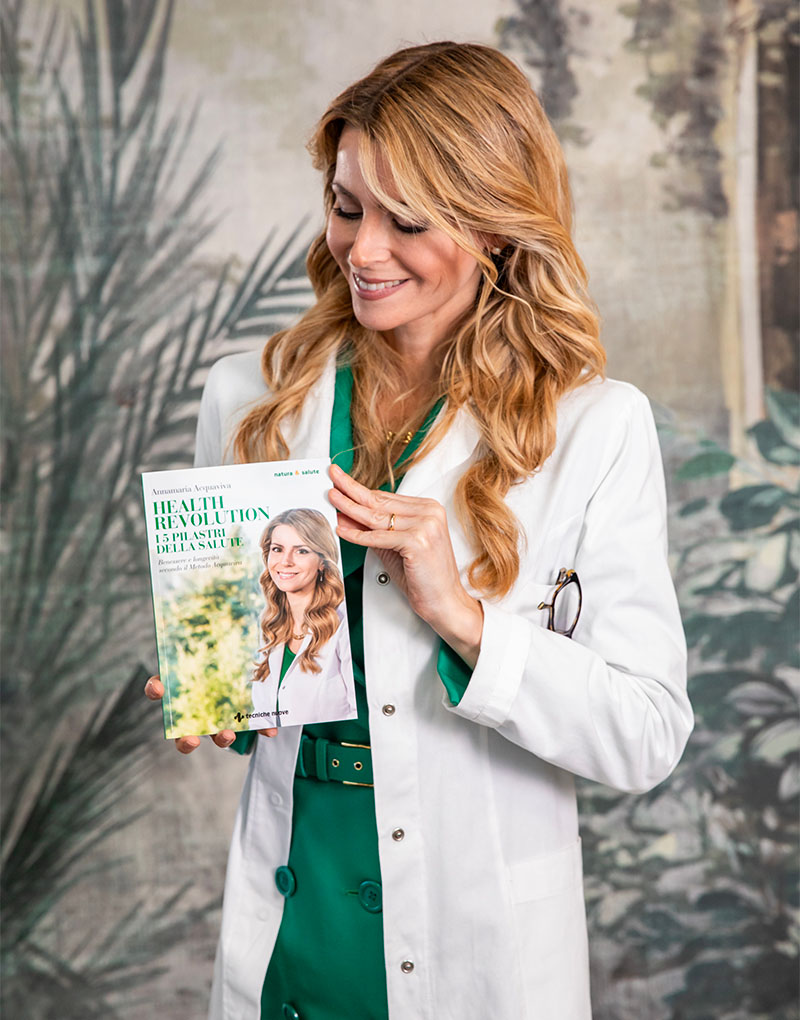
Annamaria Acquaviva is a dietitian and author of Health Revolution. In her work, she helps people build eating and lifestyle habits suited to their individual needs. Discover my professional background.
Can I help you?
Health Revolution: the 5 pillars of health
The book where I collected tools and strategies to apply my scientific method based on the 5 pillars of health.
How to achieve balance between body and mind, helping us face life's challenges.