
Stronger bones, greater independence: how nutrition can help
From my talk at SINut 2026: bone health, fracture prevention, and the evidence on California prunes.
Leggi questo articolo in italiano
Shortly before the SINut Congress, I fell while cycling in Bologna. I suffered a wound, but above all, the experience left me with a question: what would have happened to an older person with more fragile bones?
A fracture can change everyday life: walking, shopping, and going out independently can become difficult. Alongside the need to recover, a fear of falling again can lead people to move less and lose confidence in their own abilities.
I brought this reflection into my talk at the SINut Congress. Caring for our bones means protecting our independence and the freedom to keep doing what we love. Nutrition has a practical role to play in this process.
How a fracture can affect independence
A fragility fracture is caused by a low-energy injury, such as a fall from standing height that would not normally break a bone [1]. A bicycle fall is a different type of injury, but it made me think about how much the consequences can vary from one person to another.
A hip fracture may require surgery, rehabilitation, and support with everyday activities. Getting back to walking as before is not guaranteed. A 2025 review of 138 studies highlights the role of nutritional status, muscle strength, and rehabilitation in recovery [2]. Looking after our bones therefore also means caring for our muscles and how we eat.
Confidence matters too: getting moving after a fracture often means facing the fear of falling again.
Taking this question to SINut 2026
On 19 June, I explored these themes at the 16th National Congress of the Italian Society of Nutraceuticals (SINut), held at the Savoia Hotel Regency in Bologna from 18 to 20 June 2026.
My presentation, “California Prunes: A Functional Food Supporting Bone Health”, was part of the session on metabolism, targeted supplementation, and bone health, chaired by Maria Antonietta Bianchi and Vanna Bottà.
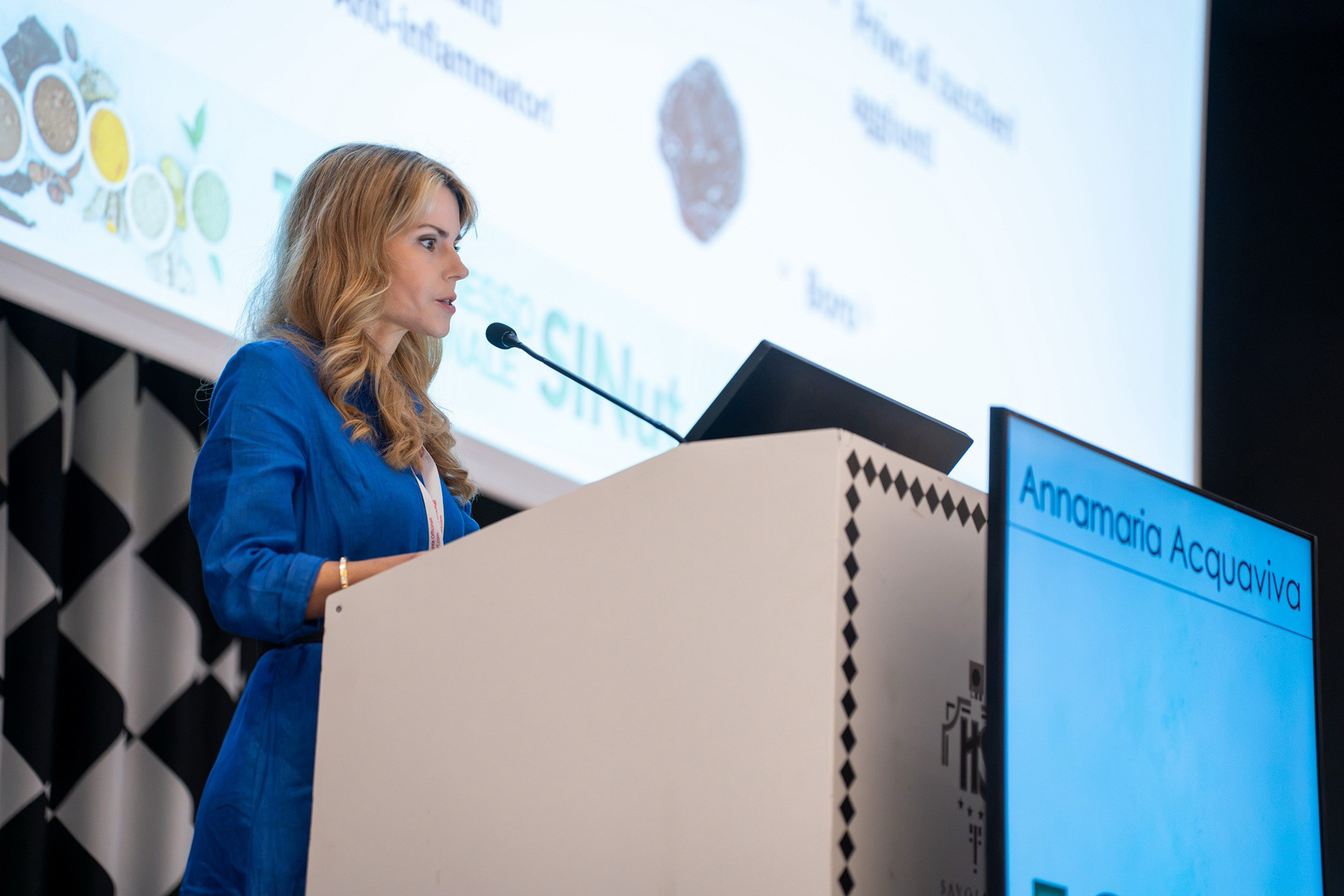
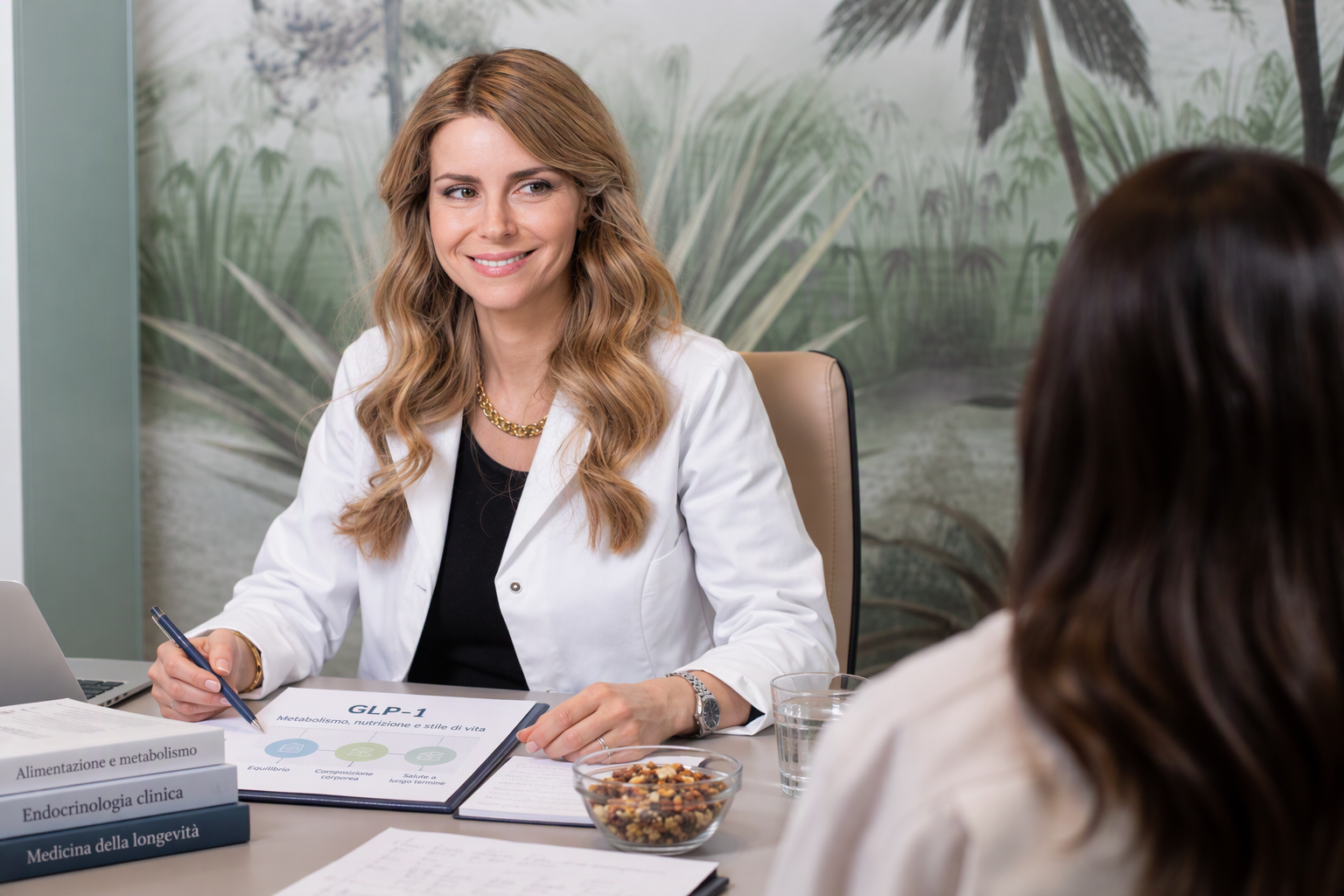
In my work, I aim to make research useful: explaining what studies tell us and how they can help with everyday choices.
Building, maintaining, and protecting bone
Peak bone mass is the bone mass reached by the end of skeletal growth and maturation. Childhood and adolescence are essential years for building it. In adulthood, the aim is to preserve it; through menopause and ageing, limiting bone loss becomes particularly important [7].
Bone is living tissue that constantly renews itself. The technical term is bone remodelling: old tissue is removed and replaced with new tissue. When that balance is disrupted, the skeleton can become more fragile.
Prunes and bone health: what the studies show
What makes California Prunes so interesting to nutrition researchers? More than 70 published scientific studies have explored their role in bone, gut, and cardiovascular health, weight management, and satiety [9].
Since 1997, the California Prune Board, with whom I am pleased to collaborate, has supported this work through a dedicated Nutrition Advisory Panel [9].
The Prune Study followed 235 postmenopausal women for twelve months. Daily consumption of 50 grams of prunes, roughly 5–6 depending on size, was associated with better preservation of hip bone mineral density than in the control group [3].
Bone mineral density, or BMD, measures the mineral content of bone and is one indicator of bone health. The findings suggest a possible dietary contribution to its preservation; they do not directly demonstrate fewer fractures.
A further analysis of the same trial found preservation of cortical density in the tibia, the compact outer layer of the shin bone, and estimated bone strength when the 50-gram and 100-gram groups were pooled [4]. Strength was estimated using imaging measurements; it was not established by observing fewer fractures.
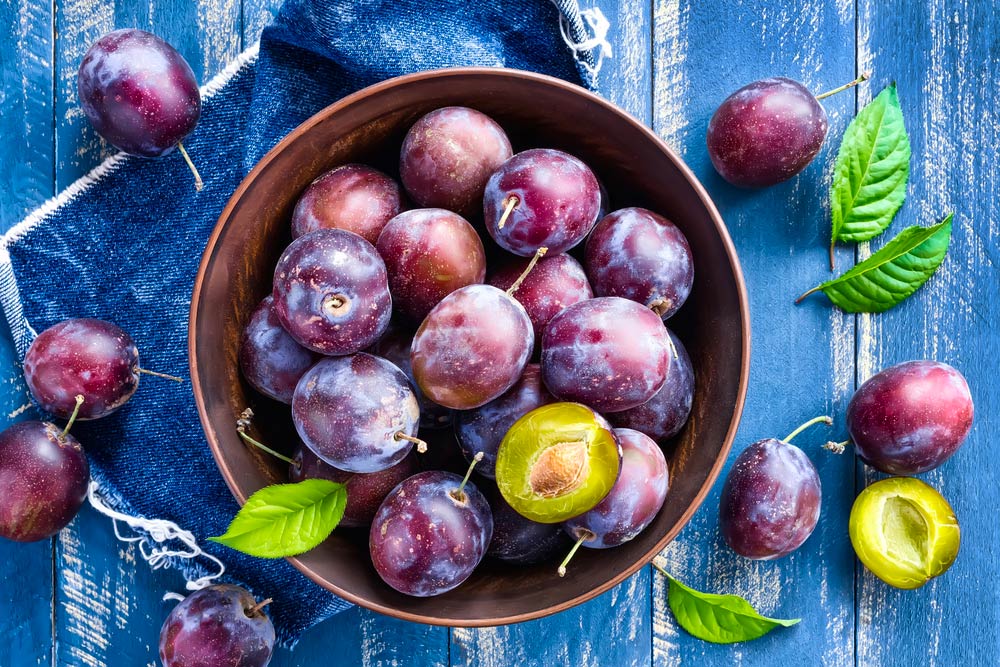
My presentation also considered research in young women and emerging findings in men. The evidence is not equally strong across all populations: findings in postmenopausal women need to be interpreted within that setting.
Understanding the gut–bone connection
What does the gut have to do with our bones? Researchers are studying how the microorganisms living in our gut, known as the gut microbiota, and the substances they produce may influence bone renewal. This connection is called the gut–bone axis.
Analyses linked to the Prune Study have identified microbiota changes and differences between women with different bone responses [5, 6]. These findings offer clues about possible mechanisms and individual variation. They do not yet provide a microbiome test that can predict who will benefit from eating prunes.
What this means for everyday life
When I work with someone, I start with how they eat and what they need. Here are some practical ways to look after our bones:
- Meet nutritional needs. Calcium, vitamin D, protein, and energy intake should be adequate. Food choices and supplementation, when indicated, need individual assessment [8].
- Work on strength and balance. Muscle training supports physical function, while balance exercises help reduce falls. Activities should be adapted to the person’s health and abilities [7].
- Make everyday surroundings safer. Lighting, rugs, footwear, and safe routes all matter. Reporting a hazard is also a preventive action [7].
- Assess individual risk. Previous fractures, family history, and other risk factors may warrant medical assessment. A DXA scan measures bone density when indicated [8].
Prunes can fit into this approach, for example with yoghurt or as part of a snack, according to individual needs and tolerance. Diet, physical activity, and any necessary treatment work together; a single food cannot replace them.
Making research part of daily life
Conferences help me bring new scientific knowledge into my work with patients and share ideas with other professionals. Here on Health Revolution, I share that knowledge with you, explaining what it means and how it can help us.
That bicycle fall brought me back to a very practical question: how can we keep moving with confidence as we grow older? Bone health is an important part of the answer. Preserving independence helps us retain the freedom to choose how we spend our days.

I thank the California Prune Board for providing the latest scientific literature to support the preparation of my talk.
Slides from my talk
To explore the studies and topics presented at the SINut 2026 Congress, you can download the slides from my talk.
Download the congress slides (PDF, in Italian)
Read more: Strong bones from a young age: notes from my NutriMI talk (in Italian).
Scientific references
- World Health Organization. Fragility fractures. 2024.
- González de Villaumbrosia C et al. Predictive factors of gait recovery after hip fracture: a scoping review. Age and Ageing. 2025;54(3):afaf057. doi:10.1093/ageing/afaf057.
- De Souza MJ et al. Prunes preserve hip bone mineral density in a 12-month randomized controlled trial in postmenopausal women: the Prune Study. Am J Clin Nutr. 2022;116(4):897–910. doi:10.1093/ajcn/nqac189.
- Koltun KJ et al. Prunes preserve cortical density and estimated strength of the tibia in a 12-month randomized controlled trial in postmenopausal women: The Prune Study. Osteoporos Int. 2024;35(5):863–875. doi:10.1007/s00198-024-07031-6.
- Simpson AMR et al. Prune supplementation for 12 months alters the gut microbiome in postmenopausal women. Food Funct. 2022;13:12316–12329. doi:10.1039/d2fo02273g.
- Simpson AMR et al. Gut microbes differ in postmenopausal women responding to prunes to maintain hip bone mineral density. Front Nutr. 2024;11:1389638. doi:10.3389/fnut.2024.1389638.
- International Osteoporosis Foundation. Exercise; Falls prevention; Prevention.
- National Institute of Arthritis and Musculoskeletal and Skin Diseases. Osteoporosis: Diagnosis, Treatment, and Steps to Take.
- California Prune Board. The California Prune Nutrition Research Program.
Can I help you?
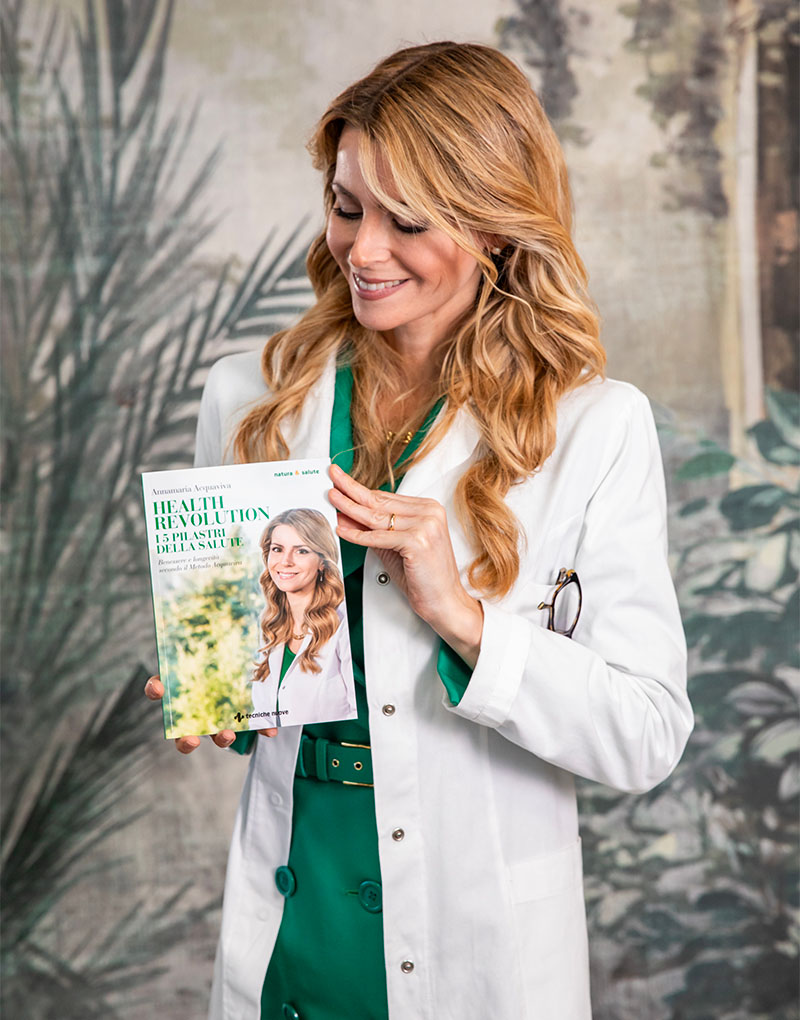
Health Revolution: the 5 pillars of health
The book where I collected tools and strategies to apply my scientific method based on the 5 pillars of health.
How to achieve balance between body and mind, helping us face life's challenges.